The Repeat Kit: Why UK Club Kids Are Dressing From a Short List in 2026
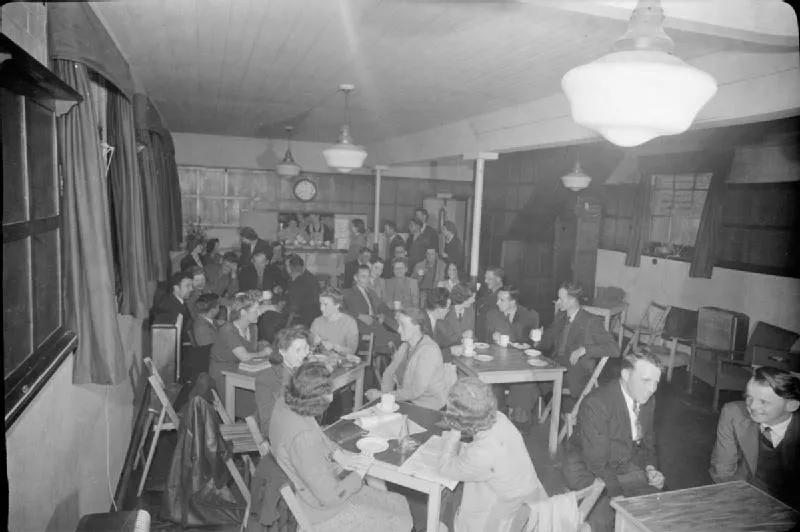
Photo: Ministry of Information Photo Division Photographer, Public domain, via Wikimedia Commons
On a wet Saturday in Peckham, the queue outside a 300-capacity room looks less like a fashion show and more like a uniform inspection. Not because everyone is wearing the same thing — they aren't — but because the same things keep appearing: a boxy black jacket, a stretched navy crewneck, a pair of beaten-up indoor trainers. The people wearing them look comfortable, not coordinated. That's the point.
Sixteen Is a Friendly Number
The number isn't a rule handed down by a brand. It's a working limit that has settled into place across UK dancefloors over the past year or so: sixteen items, worn in rotation, repaired when needed, replaced only when dead. A jacket. Two pairs of trousers. Three tops. One pair of trainers that never touch the street outside. A bag small enough to dance with. The rest is weather-dependent layering and one wild card — a scarf, a ring, a pair of gloves — that keeps the whole thing from feeling like a school kit.
Mara Ellison, a stylist who works with emerging UK artists, calls it the fixed kit. "Sixteen is enough to cover a cold night, a warm room, a spill, a lost earring and a last-minute change of plan," she says. "It's not minimalism as an aesthetic. It's minimalism as a way to stop thinking about clothes at 11pm."
The Queue Tells You Everything
What's changed in 2026 isn't the existence of a capsule wardrobe. It's who is using one and why. The capsule wardrobe used to be a middle-class spreadsheet — neutral tones, cost per wear, a Pinterest board called 'essentials'. The fixed kit is a club tool. It's built for low light, hot rooms, sticky floors and the specific social arithmetic of being recognised across a night.
"People want to be seen, but not necessarily in something new," says Priya Shah, who runs an independent shop in Leeds. "They come in asking for the second version of something they already own. A backup, not a new idea. They're buying less but asking more questions about how it washes, how it ages, whether it'll still look right in a year."
That shift is visible in the numbers, too. Shah says sales of plain basics — heavy cotton tees, straight-leg trousers, simple knits — have been steadier than one-off statement pieces. "The statement piece is still there," she says. "But it's one item in sixteen, not the whole personality."
The Photographer's View
Jules Okafor shoots club nights in Bristol and has watched the same jacket appear on different people for months. "In 2024 I'd see a new jacket every week," he says. "Now I see the same jacket on four different people, and I know which one is which because of how they wear it — sleeves pushed up, collar flat, hood down. The repetition makes the person more visible, not less."
That's the counterintuitive bit. A small wardrobe doesn't erase individuality; it gives it something to push against. When everyone in the room is working from a similar short list, the details get louder: the way a jacket sits, the length of a chain, the specific scuff on a trainer. The fixed kit turns getting dressed into a form of editing rather than accumulation.
Not Anti-New, Just Pro-Recognition
It would be easy to read the sixteen-item wardrobe as a reaction against drop culture, against the endless scroll of newness, against the pressure to look expensive. There's some of that. But the people wearing it don't talk about restraint. They talk about recognition.
"I want someone to spot me across the room," says one regular at a Glasgow night, who has been wearing the same black over-shirt since spring. "Not because it's loud. Because it's mine."
That logic runs through the independent shops and stylists I spoke to. The fixed kit isn't a rejection of style. It's a way of making style legible. In a year when the loudest advice is still to buy more, the quietest flex is to buy well enough to wear the same thing until people know you by it.
The sixteen-item night-out wardrobe won't suit everyone. Some people need the ritual of newness, the spark of a fresh find. But for a growing slice of UK club culture, the small wardrobe is doing something the big one couldn't: it's making a night out feel like a place you belong, not a feed you're performing for.