The Quiet Room Has a Queue: Britain’s Listening Bars and the New Status of Low Volume

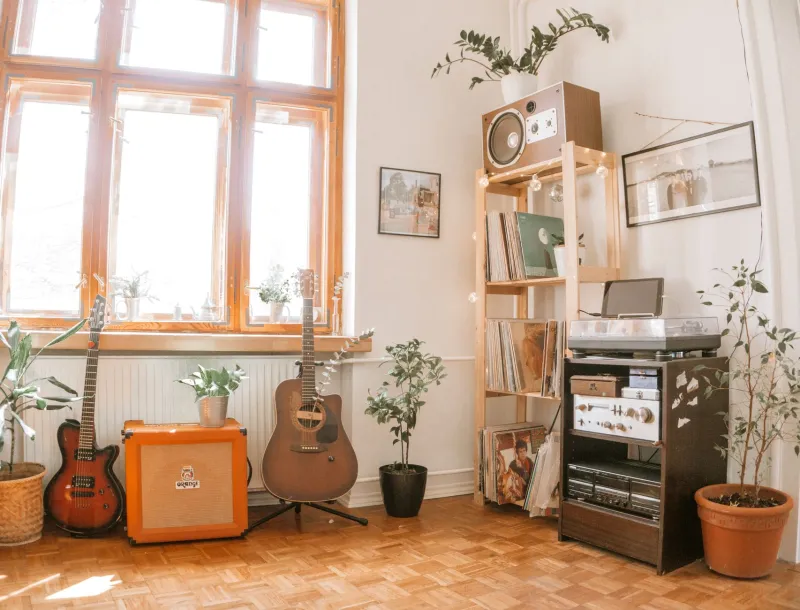
Photo: intimate listening bar interior with turntable and speakers, low warm lighting, people seated at small tables, via images-wixmp-ed30a86b8c4ca887773594c2.wixmp.com
On a Thursday night in Peckham, the loudest thing in the room is the door. It clicks shut behind you, then a staff member gestures at the sign taped to the bar: no phones, no requests, no dancing. Forty people are seated at small tables around a pair of floorstanding speakers that look like they could handle a warehouse. They are playing a full side of a record most of the room clearly knows by heart. Nobody is shouting over it. That, increasingly, is the point.
The door policy is a volume knob
Britain’s listening bars have moved from curiosity to category. The format is simple enough: a decent room, a serious system, a short drinks list and a program built around albums rather than tracks. But the thing that separates a listening bar from a pub with a nice turntable is discipline. The volume sits at conversation level. The music is foreground, not wallpaper, but it never becomes a wall. You can hear the room breathe between songs.
In 2026, that restraint reads as confidence. Clubs have spent decades training us to measure a night by how much it overwhelms us. Listening bars offer the opposite kind of proof: a room that trusts its own taste enough not to turn everything up. The status signal is not a guestlist wristband or a table by the DJ. It is knowing where to go when you want to hear something properly, and knowing how to behave when you get there.
Why Britain is tuning in now
The timing makes sense. The past few years have made small rooms feel more valuable, not less. A 50-capacity space with a good system and a tight program can build a regular crowd without the overheads of a club. It can sit above a shop, behind a coffee bar, in a railway arch that would otherwise be storage. Bristol has a handful of these rooms tucked into side streets. Glasgow’s are often part record shop, part bar. Leeds and Manchester are experimenting with Sunday sessions that end before the last train. None of them are trying to be the main event. That is why they work.
The secondhand hi-fi market has helped. A decent turntable, a pair of solid speakers and a room that has not been acoustically ruined by hard surfaces can now be assembled for less than the cost of a mid-range sound system in a club. The vinyl revival gets blamed for a lot, but here it has done something useful: it has made the album feel like an event again. A full-side play is not a stunt. It is a way of asking people to stay with one idea for twenty minutes.
Curation without the clipboard
The best listening bars do not program like clubs with the lights turned up. They program like radio stations with a door. A resident might play dub, ambient, soul, post-punk or library music across a night, but the through-line is texture and attention. Some rooms run album launches. Some do Sunday afternoon sessions where the first record is announced in advance and the rest is left to the selector. A few have started printing small run flyers listing the full albums played that month, which feels less like merch and more like a reading list.
That is where the scene-building happens. The crowd is not there to be seen in the usual way. It is there to be in the same room as other people who care about the same records. The conversation at the bar is part of the program. You might arrive alone, hear something you would never have chosen and leave with a recommendation scribbled on a receipt. That is a different kind of night out: slower, cheaper, more memorable.
The quiet economy
There is a risk, of course. Quiet can become a luxury product if venues lean too hard into exclusivity. A £14 cocktail and a £10 ticket are not outrageous in 2026, but they add up. The rooms that get it right keep the door open, literally and culturally. They publish their listening policy, keep a few walk-in seats and do not treat silence as a personality test. The point is not to make people feel uncultured for asking a question. The point is to make the room work for everyone who wants to listen.
That balance is the real test of the format. A listening bar is not a library. It is a social space with a volume limit. The people running the best ones know that the atmosphere is fragile: one loud table can flatten a whole night. So they staff for it, program for it and gently enforce it. The result is a room that feels curated without feeling cold.
What the quiet is for
In a culture that still equates intensity with value, low volume is quietly radical. It asks you to lean in. It makes the music feel closer, not smaller. It gives a night a shape without a drop. And it lets a scene form around something other than a dancefloor: a shared hour, a good system, a record played all the way through.
So yes, the queue is real. The best listening bars in Britain now fill up before the first side has finished. But the appeal is not that they are hard to get into. It is that once you are inside, nobody is trying to impress you. The room is doing the talking. All you have to do is listen.