The Best Night Out in Britain Now Ends in a Chair
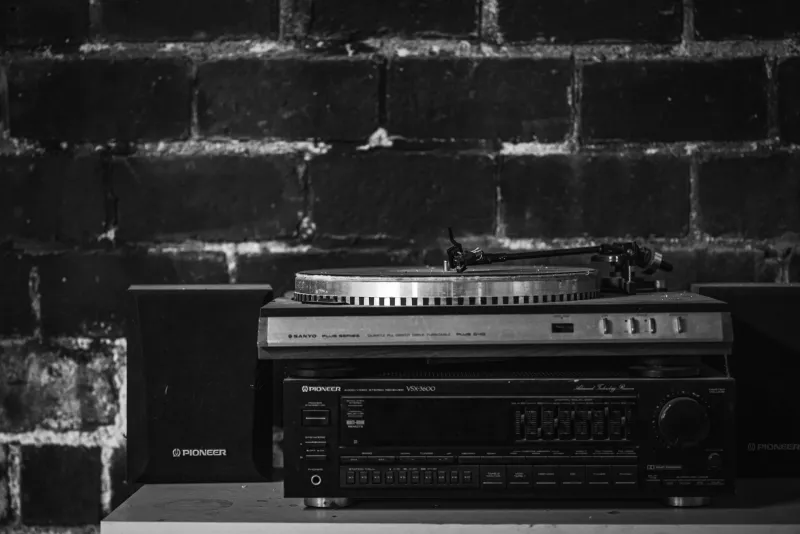
In 2026, the best night out in Britain can end with you sitting down. Not slumped in a taxi queue, not shouting over a bar staffed by one exhausted person, not queuing for a club that will play the same four songs as the last one. Sitting down, in a small room, with a record playing and a room full of people who have agreed to pay attention.
That is the listening bar. It is not a new idea—Japan has been doing it for decades, and London has had outposts for years—but it has quietly become something more ordinary and more useful. It is the new local for people who want company without chaos. Serious sound, vinyl-first policies, no dancefloor. A place to be alone together.
The anti-club
The radical thing about a listening bar is not the equipment. It is the social contract. You do not go to be seen. You do not go to perform. You go to sit with other people and let a record do the talking.
In a year when every screen is begging for a reaction, that feels almost rebellious. The room asks for something increasingly rare: sustained attention. No one is filming the DJ. No one is shouting requests. No one is trying to make the night into content. The night is the content.
This is why listening bars have slipped into the gap left by pubs and clubs. The pub is still the pub, but many are louder, more food-led, more screen-heavy. The club is still the club, but the costs are brutal and the rituals are fixed. A listening bar offers a third thing: low light, good speakers, a short menu, a long record. You can arrive alone. You can leave alone. In between, you are part of a room.
The new local, from Glasgow to Bristol
The trend is not London-only. That is what makes it interesting. In Glasgow, the jazz basement and the small bar with a proper turntable have become part of the same night out. In Bristol, the music-led small room has absorbed the listening-bar idea without making a fuss about it. In Leeds and Manchester, the multi-floor venue has learned to keep one floor quiet. The listening bar is less a template than a mood: turn it down, turn it up, sit still.
It also fits the economics of the high street in 2026. A small room with a good system, a tight drinks list and a capacity that does not require a big DJ fee is more viable than another cavernous late-night space. It can open earlier. It can close earlier. It can be a local without pretending to be a club.
That is the quiet shift. The listening bar is not trying to replace the club. It is replacing the bit before the club, the bit after the club, and the bit where you wanted to go out but did not want to be out out. It is the new local because it asks less and gives more.
Six rooms to book into this winter
Spiritland, London — The one that made the idea legible to a certain kind of Londoner. Serious sound, broad programming, food that does not get in the way. Go early, sit near the speakers, order something slow.
Brilliant Corners, London — Dalston's listening bar with a Japanese-inflected feel: vinyl, low light, a menu that understands you are staying for a while. The room is small enough that the record is the main event.
Giant Steps, London — A Hackney room with the same broad church approach: soul, jazz, dub, electronics, all played at a volume that lets you talk without shouting. The kind of place where a pint turns into three records.
The Blue Arrow, Glasgow — A jazz basement that gets the listening-bar spirit without the corporate sheen. Sit close, keep your voice down, let the band or the record do the work.
The Love Inn, Bristol — A small, warm, music-led bar where the listening is part of the furniture rather than a policy. Check the listings, arrive curious, stay for one more.
Headrow House, Leeds — A multi-floor venue that understands the value of a quiet room in a loud building. Find the corner with the good system and the sensible volume. That is the local.
The quiet is the point
None of these rooms are libraries. They are bars. People drink, people talk, people meet. But the volume is set so that the record is not background. The quiet is the point. It is what makes the room feel bigger than it is.
At SIXTEN, we are not here to tell you the club is dead. It is not. But the night out is changing. The best nights now often end earlier, in a smaller room, with a better chair. You sit down. You shut up. You listen. And for a couple of hours, that is enough.