No Audition, No Problem: The Music Rooms Britain Actually Needs

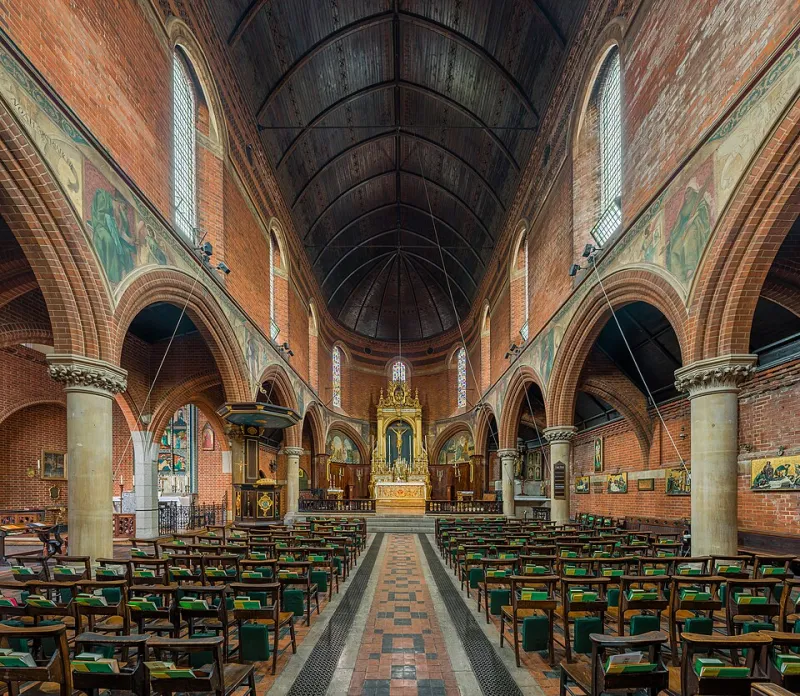
Photo: Dietmar Rabich, CC BY-SA 4.0, via Wikimedia Commons
On a Thursday in Leeds, a choir of about sixteen people is rehearsing in a church hall with bad heating and good acoustics. The sopranos arrive early. The altos arrive late. The pianist misreads a repeat. Nobody minds. A woman in a fleece asks whether her neighbour can join next week. Yes, she can. That is the whole vetting process.
It is not a showcase. There is no guest list, no content strategy, no one filming the chorus for a clip. It is a room full of people who have agreed to be slightly wrong in public, together, on a weeknight. And it is more culturally alive than most of the polished releases that will be pushed through the usual channels this month.
The polished release is not the scene
British music coverage still loves the drop: the campaign, the premiere, the meticulously plotted rollout. Fair enough. Professional records need professional noise. But the assumption that vitality flows only through the release cycle has become lazy. In 2026, some of the most urgent musical activity in the UK is happening in rooms that would never describe themselves as part of the industry at all.
Community choirs. Beginner band nights. Pub orchestras. Open-invite workshops where the only entry requirement is a willingness to sit down and have a go. These are not quaint alternatives to the real thing. They are the real thing for a lot of people, and they are doing something the polished circuit often cannot: asking for participation rather than attention.
That shift matters. After years of culture optimised for the scroll, the amateur room offers a different contract. Turn up. Listen. Keep time. Help someone else through the bar they keep fluffing. It is neighbourly obligation dressed as a hobby, and it is quietly more radical than another launch party.
A room with a job to do
Take the pub orchestra that meets in a Halifax back room on Sunday afternoons. The arrangements are handwritten, the brass is uneven, and the fiddles take a while to agree on the tune. Pint glasses sit on the windowsill. The audience is mostly other players' mates. Nobody is trying to get signed. The pub gets a quieter Sunday; the players get a reason to practise. The job of the room is not to produce a product. It is to give people a place to belong on a day that can otherwise feel long.
Then there is the beginner-band night in Bristol where the backline is shared, the slots are ten minutes, and the soundcheck is essentially someone asking if the vocal can be heard. First-timers play first songs. The audience is instructed, gently, to be kind. That instruction is not a lowering of standards. It is the standard. The night exists so that people can find out what happens when they play with others, rather than waiting until they are good enough to deserve a stage.
In Glasgow, an open-invite workshop runs with no auditions and no fixed ensemble. People bring parts. A drummer who has played for forty years sits next to a teenager on a practice pad. In Cardiff, a community choir takes new singers mid-term, no audition, repertoire split between pop and folk. The point is not the performance at the end of the season. The point is the Tuesday.
These rooms are not identical, and they should not be flattened into a trend. But they share a logic: access over polish, repetition over spectacle, people over product.
The wrong note as social glue
A wrong note is audible proof that nobody is faking it. In professional settings, mistakes are hidden or fixed. In amateur rooms, they are shared. That shared risk builds trust faster than any networking event. You hear someone lose their place, then find it again. You hear the room carry them. That is a social skill, not just a musical one.
This is why the amateur night feels more culturally urgent than another perfectly executed release. It is not that professionalism is bad. It is that professionalism is not the only measure of a scene. The amateur room asks different questions: Who is here? Who is missing? Who can we make room for? What happens if we do this again next week?
The wrong note is not a failure of the product. It is evidence that the product is not the point. The point is the room, and the room is built by the people who keep showing up.
What amateur spaces ask of us
None of this is free. Rooms need heating, insurance, accessible entrances and a host who answers emails. Pubs need to see a reason to keep the back room free. Churches and libraries need to be allowed to be noisy. Councils need to value the Tuesday rehearsal as much as the Friday gig. Amateur music is cheap to romanticise and expensive to maintain.
It also asks something of the audience. Not passive consumption, but a bit of reciprocity. If you go to a beginner band night, you are not there to review it. You are there to listen. If you join a choir, you are not there to be discovered. You are there to sing. That sounds modest. It is actually a correction to a culture that has spent too long treating taste as a spectator sport.
The next open door
If 2026 has a cultural lesson so far, it is that participation is a form of taste. The best music in Britain might be the bit that does not stream. It might be the bit that happens in a hall with bad heating, where the chords are approximate and the door is unlocked.
So find the open night. Join the choir that takes mid-term singers. Go to the pub orchestra and clap for the section that keeps coming in late. Bring your wrong notes. They will make room.