The Last Mile Is the New Front Row: How UK Nightlife Got Local Again in 2026
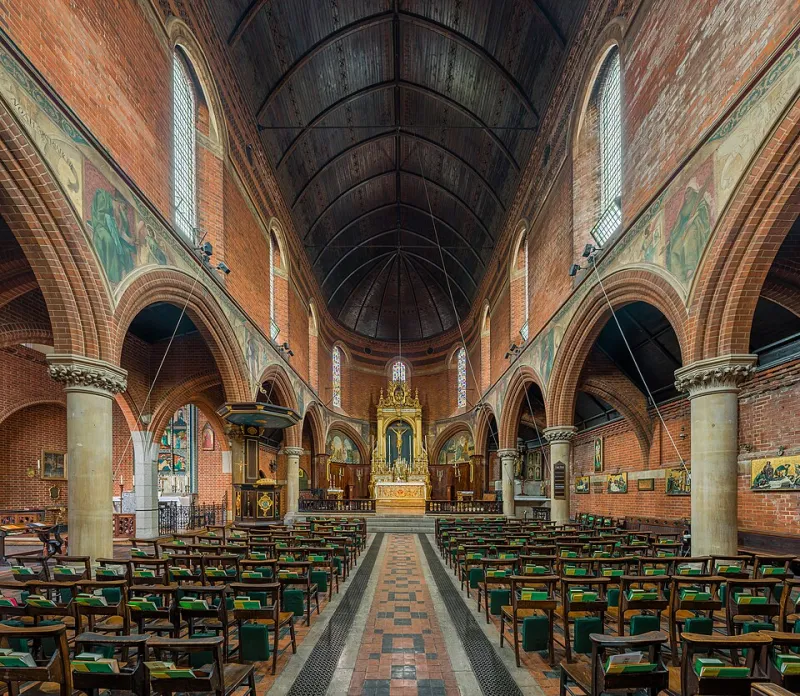
Photo: Diliff, CC BY-SA 3.0, via Wikimedia Commons
For years, the UK night out was edited by the train timetable. You picked the venue near the station, checked the last service, worked out whether a taxi home was worth the argument, and let the rest of the evening fall into place around that. By 2026, a different kind of map is appearing. Promoters, small venues and micro-collectives are building nights around a sixteen-minute walkable radius — not as a gimmick, but as a way of making the whole evening feel like one continuous thing rather than a scramble between transport hubs.
The last train was a bad editor
The last train did not just decide when you went home. It decided when the headline went on, how long the support set could be, whether the room filled up early, and whether the after-party was even possible. It turned every night into a countdown. It also made the biggest venues, the ones closest to major stations, look like the only sensible option.
The sixteen-minute radius flips that. If the room is close enough to walk home, the night no longer ends at the platform. It ends on your own street. That sounds small. In practice, it changes everything: the pace of the lineup, the kind of crowd that stays, the food people eat afterwards, the shoes they wear, the way they say goodbye.
What a walkable room actually changes
A promoter working to a walkable radius tends to book differently. Sets can start earlier without feeling like a matinee. Supports get room to breathe because nobody is watching the clock for the 23:40. A second room or a late extra set becomes viable because the audience is not mentally already queueing for a train. The night can have a denouement instead of a cut-off.
Door policy shifts too. If people live within walking distance, they arrive in a different mood — less rushed, more likely to come early and stay late. The after-party stops being a mythical thing that happens to other people and becomes a flat, a back room, a late-opening café, a park bench on the way home. Even style follows the route. In 2026, the useful outfit is the one you can walk a mile in at 2am: flat shoes, a layer you can carry, a bag that does not need a taxi to protect it.
Where the radius is showing up
You can feel the logic in Sheffield around Kelham Island and Neepsend, where the walk between rooms is short enough that a night can drift from one to another without a plan. It is there in Manchester's Northern Quarter and Ancoats, in Bristol around Stokes Croft and Montpelier, in Glasgow between Garnethill and Charing Cross, and in Leeds around the Calls and Mabgate. In London, it is less about a district and more about pockets — the bits of Hackney, Dalston and Peckham where a night can be stitched together on foot rather than in a rideshare app.
None of these places share a sound. What they share is maths. A cluster of small rooms, a few late food options, a route that does not feel like a motorway, and an audience who would rather walk than wait. Micro-collectives have been quicker to notice than bigger promoters: they are already printing routes on flyers, listing walking times next to set times, and ending bills with a local act whose crowd can spill out and walk home together.
The sixteen-minute rule: map your own radius
You do not need a promoter's spreadsheet to use this. You need a front door and a bit of honesty about what a walk actually feels like at night.
- Start at your own door, not the city centre. The radius is personal. Your sixteen minutes is not the same as someone else's.
- Draw it as a walk, not a drive. Check the route at 1am, not Sunday lunchtime. Lit streets, crossings, pavements and open corners matter more than distance on a map.
- List the rooms inside it. Include the small ones, the weird ones, the upstairs ones, the ones you always forget. Add late food, cashpoints and a bus stop as backup.
- Test the route on a normal night. Walk it once when you are not in a rush. Notice where it gets quiet, where it gets loud, where you would want a friend alongside you.
- Book the night by the walk back. Put the venue closest to home at the end. Meet at the room, not the station. Give yourself a buffer so the last mile is not a sprint.
- Dress for the pavement. The best style move in 2026 is the one that still works when the night has ended and the bus has not come.
The catch
A walkable radius can become another way of narrowing the door. If the only places inside the circle are expensive flats and well-lit boutique streets, the local night becomes a private one. The point is not to romanticise the postcode. Promoters using the radius need to think about safe routes, accessible pavements, late transport links and the people who live further out but still want to be part of it.
The last mile is not a replacement for public transport. It is a correction. For too long, the night was designed around the journey out. In 2026, the more interesting question is the journey back — who can make it, how it feels, and what kind of night you build when you stop pretending the last train is the only way home.