The Hook Comes First: How UK Songwriters Are Building Tracks Backwards for the Feed
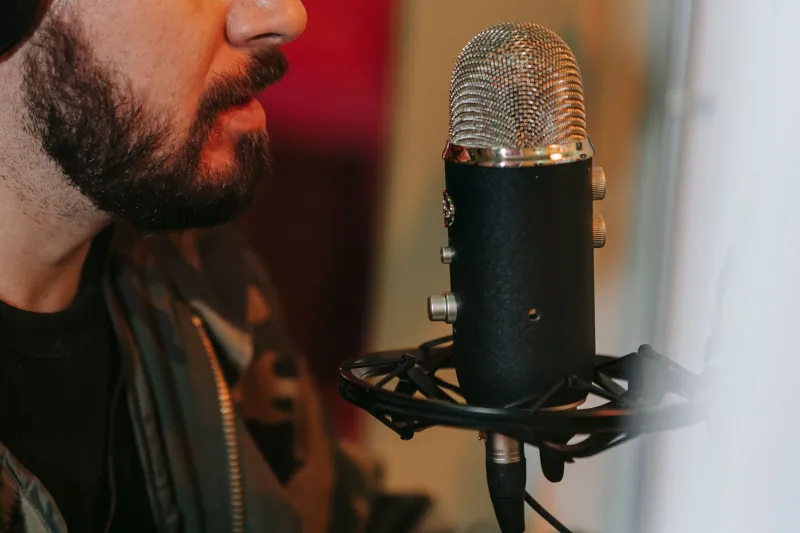
There is a particular kind of voice note that lands in a producer's inbox more often in 2026 than it did five years ago. It is not a demo. It is not a verse. It is a hook: sixteen seconds of melody, a repeated phrase, a small turn of feeling, recorded on a phone in a stairwell or a parked car. The rest of the song does not exist yet. That is the point.
The old order was roughly stable for decades. Write the song, record the song, pick the single, hope the chorus lands before the listener drifts. The new order starts at the moment of maximum attention and works backwards. In the UK, where pop, rap, dance and guitar music all share a crowded attention economy, that reversal is producing some genuinely strange and sometimes very good records.
The sixteen-second test
Platform logic is not subtle. Short-form video rewards a clean idea, a visual anchor and a reason to stay past the first three seconds. For musicians, that has turned the hook into a kind of thumbnail: the bit that has to work before anyone commits to the whole thing. A singer in Manchester describes it as writing the punchline first and then deciding whether the joke deserves a setup.
The result is not always a shorter song. Plenty of tracks still run to three minutes or more. But the architecture has changed. Intros are leaner. Verses arrive with less preamble. The chorus might appear before the first proper verse, or the song might open with the post-chorus because that is the part people are most likely to clip. In the studio, producers talk about leaving negative space—not because they are being arty, but because a sparse arrangement survives a phone speaker better than a dense one.
Writing from the punchline
The craft question is whether starting with the hook makes songs worse. Sometimes it does. A track built entirely around one loop can feel like a trailer for a song that never arrives. The verses become scaffolding; the bridge disappears; the final chorus repeats because there is nowhere else to go. You can hear the feed in the structure, and the structure starts to feel thin.
But constraint can also be useful. A hook has to carry more weight when it is the first thing people hear. The melody has to be clear without a build-up. The lyric has to land without a caption explaining it. That tends to push writers towards stronger images and fewer filler lines. A Bristol producer puts it simply: if the sixteen-second version is boring, the three-minute version is probably boring too.
The best of these records do something the algorithm cannot do on its own. They use the hook as an entrance, not the whole house. There is a difference between a song that is easy to clip and a song that is only a clip. The former can still surprise you on the third listen. The latter is spent by the second.
The compromise ledger
It would be naive to pretend there are no compromises. Writing for the scroll can flatten dynamic range, encourage a certain sameness in tempo and chorus placement, and make artists think in terms of moments rather than records. It can also push them towards a version of their work that is optimised for discovery rather than repeat listening. The feed is a shop window. It is not the room.
Yet the artists navigating this best tend to treat the hook as a door handle rather than a destination. They write the sixteen seconds, then ask what else the song can do. They keep the strange verse. They let the outro drift. They make a record that rewards the person who stays. In 2026, that might mean releasing a feed-native version and a longer version, or building a track that opens with the hook and then quietly refuses to repeat it.
Can the album survive the feed?
The album is not dead, but it is no longer the default unit of discovery. It has become something closer to a deliberate pleasure: a sequence, a mood, a place to stretch out. UK artists are still making them, and listeners are still finding them, but the route in is often a sixteen-second fragment. The album survives by offering something the feed cannot—patience, context, a payoff that takes longer than a scroll.
That is not a tragedy. It is a change in the front door. The sixteen-second single is a new kind of craft, and like any craft it can be done lazily or well. The lazy version is a hook with a song attached. The good version is a song that knows exactly where its door is, and then invites you further in.
At SIXTEN, we are less interested in whether the album can survive than in what artists do with the pressure. A hook is a promise. The album is still the place where a promise gets kept.